Inside the intensely competitive world of today's pro-level oversteer competition, success is not merely purely a product of brute torque or driver bravado. Instead, it has evolved into a intricate science that demands a painstaking blend of selecting a proven vehicle platform, outfitting it with the highest-quality competition parts, and, most importantly, understanding its real-time behavior on the course through sophisticated suspension tuning applications. This definitive handbook functions as your roadmap from the very first idea of a competition vehicle right through to the final telemetry-optimized adjustments that transform a powerful machine into a repeatable winner. We will examine in detail the precise engineering of vehicle alignment optimization, demonstrating how a modern drift tuning app like a dedicated telemetry system removes guesswork and offers unmatched visibility into your vehicle's true dynamics.
The cornerstone of any great drift car is, without question, the chassis itself. A select group of platforms have earned legendary status within the worldwide drifting scene due to their built-in handling characteristics, robust build quality, and the enormous ecosystem of aftermarket parts available. Choosing the optimal starting point is the initial and most crucial choice a builder will make. To illustrate, the BMW E36 is universally acknowledged as one of the greatest all-around drift platforms of history. Its near-perfect 50/50 weight distribution, coupled with a RWD setup and bulletproof straight-six engines, creates a platform that is both accessible for novices and highly competitive in the possession of a expert driver. The next step of this lineage, the E46 model BMW, refines these qualities with a even more refined chassis, wider track for improved high-speed stability, and still a greater degree of turning capability straight from the OEM. A distinct powerful platform in the professional circuit is the C6 generation Corvette.
This American track weapon brings a unique set of benefits to the drifting sport, such as a lightweight alloy chassis, a transaxle-style transaxle that aids in an perfect balance, and the immense torque of a big GM LS engine. This fusion renders it an complete force on track, capable of initiating and maintaining continuous slides with seemingly easy deployment of throttle. For builders desiring outstanding performance per dollar, the 350Z model Nissan stands out as a excellent choice. It comes from the factory with a rigid body structure, a effective OEM limited-slip differential, and the free-revving VQ series powerplant that provides sufficient performance for learning and advancing in the discipline. Its successor, the Nissan 370Z, brings further improvements in body strength, steering geometry, and outright motor performance, establishing its place as a popular selection among serious drivers. Additional historic vehicles that deserve consideration encompass the agile rotary-powered FC generation RX-7, the most popular Nissan S13 240SX, the American Ford SN95, the modern BMW E90, and the tiny yet unbelievably playful and instructive Mazda Miata. Every single one of these platforms offers a different set of characteristics, complexities, and possibilities, but they all share the basic elements required to become a capable sliding vehicle.
However, selecting the right platform is only the starting point. To unlock the true potential of any of these vehicles, significant upgrades to the steering geometry and chassis control systems are absolutely non-negotiable. This is where the realm of performance drift-spec hardware comes into sharp focus. The most most game-changing improvement for a purpose-built competition vehicle is the fitting of a high-performance drift angle kit. These sophisticated kits, such as those developed by industry leaders like SLR, are designed to significantly enhance the car's maximum steering angle. A OEM road car is severely limited in how far its front wheels can pivot, a safety compromise for daily driving. In drifting, however, maximum opposite lock is constantly needed to control and maintain a angle. An steering kit replaces the stock uprights, tie rods, and potentially control arms with pieces that permit the front tires to achieve degrees of turn in excess of 70 or even 80 °, versus a typical OEM setting of around 40 to 50 °.
This vastly increased capability provides the operator with exponentially enhanced control during a slide, making it much more straightforward to start a oversteer moment, sustain it through a sweeping corner, and change seamlessly from one side to the other. The difference in handling is nothing short of transformative. Paired with a correctly specified modification is the equally essential enhancement to the vehicle's damping system. Generic or including high-end road adjustable suspension are just not intended for the unique and harsh needs of sliding. A purpose-built system of coilovers is crucial. These specific suspension components incorporate custom damping rates and spring rates that are tuned for the extreme mass transition that is characteristic of sliding. When a operator starts a slide, the vehicle's mass is transferred rapidly to the outer of the bend. Correct competition dampers manage this transfer in a consistent fashion, enabling the chassis to settle promptly and giving the pilot accurate feel through the wheel and driver's seat. They furthermore provide precise adjustment of ground clearance, shock absorber rate, and corner weighting, which are all key parts of dialing in the chassis's dynamics to a specific venue or driving style. Together, a high-quality steering angle kit and a expertly chosen pair of drift-spec coilovers form the absolute physical cornerstone upon which all later tuning is constructed.
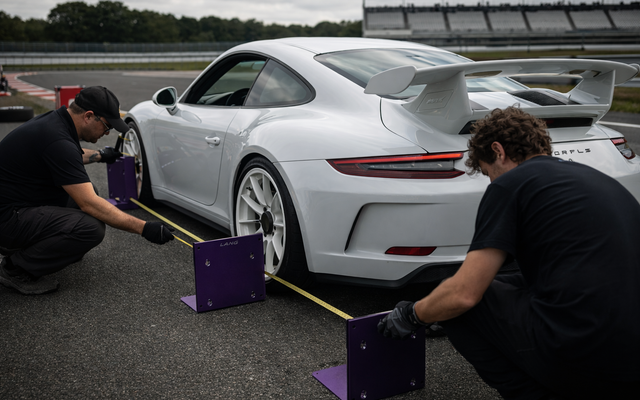
Once the fundamental hardware is installed, the next essential stage in the project is the precise adjustment of the vehicle's alignment. This is the world of vehicle alignment optimization, a process that can seem intimidating to the newcomer but is, in reality, the secret to transforming a set of high-performance pieces into a harmonious and consistent whole. The most discussed aspect of tuning for drifting is definitely negative camber. Camber angle is the inclination of the rim in relation to the upright plane when viewed from the front of the car. When the top of the tire is tilted towards the chassis, this is referred to as inward tilt. In sliding, inward-leaning wheels on the front axle tires is universally employed and is considered essential. The logic is deeply related to physics.
When a chassis is cornering at high angles, the chassis tilts toward the outer of the bend. This chassis roll makes the outside front tire to diminish its optimal grip area with the tarmac. By adding an inward tilt, the wheel is pre-leaned to counteract this roll. As the chassis leans into the corner, the tire flattens out on the road surface, maximizing its grip at the exact moment when it is needed most for control. Usually, front angles for a dedicated drift machine fall between approximately -3 degrees to as much as -5 degrees or even more, contingent on the parameters of the chassis setup, compound choice, and pilot feel. coilover setup tips The rear axle wheels also utilize inward tilt, but the values are generally less and less aggressive than the front. Too much camber at the back can make the car extremely loose and difficult to predict on acceleration use, as it diminishes the usable grip area of the powered tires during forward throttle application. Thus, rear camber settings are commonly in the range of -1 degree to -3 degrees, striking a precise equilibrium between offering sufficient cornering bite to assist in initiating and sustaining the angle while simultaneously keeping effective traction for power-down the turn. camber angle is only one part of the larger tuning puzzle, which furthermore encompasses toe, self-centering steering, and steer correction correction.
Toe is the angle of the tires as seen from the top. Positive toe means the front edges of the wheels are closer together than the rear edges, while toe-out means the opposite. For sliding, a slight amount of front axle negative toe is commonly used to improve the initial response handling feel, making the car feel more nimble and ready to initiate a oversteer moment. Rear toe is usually set to zero or a incredibly slight amount of positive toe to foster straight-line stability under throttle. Caster is the longitudinal or rearward angle of the suspension pivot when observed from the side-on of the chassis. Positive positive caster increases feedback and high-velocity solidity, and it also increases negative camber gain during steering, which is very beneficial. Setting these values is a intricate dance where a change to a single setting can and often will impact the other settings. The traditional approach for tuning a car's suspension geometry for sliding has for a long time been a labor-intensive process of guesswork and adjustment. A driver or team would apply a adjustment based on experience, test the chassis on track, depend on the pilot's personal feel and feedback, and then introduce a further adjustment. This loop would repeat again and again until the chassis felt drift suspension tuning guide "acceptable" or the allotted practice period ran out. This methodology is not only incredibly slow in terms of hours and costs, but it is additionally inherently imprecise.
Driver feel is a infamously inconsistent data source, colored by countless factors such as exhaustion, varying track conditions, weather, and just the focus of the pilot on that given session. What feels "tail-happy" on one lap might feel "pushing" on the next run, leading to conflicting information and frustrating tweaks. This long-standing limitation in vehicle dynamics optimization is precisely where modern engineering tools has intervened to revolutionize the process.
The rise and integration of advanced drift telemetry software has ushered in a new era for tuning and perfecting professional drift machines. These systems, represented by innovative products like GripDial, work by physically measuring the real-time physical performance of the drift telemetry software car as it is being driven on the course. As opposed to depending on subjective feedback, these systems gather measurable information on key factors such as damper compression and extension, individual tire rotation, lateral and longitudinal g-forces, lock position, and driver input application. This acquired information flow is then processed by advanced software that can plot and interpret the metrics in a comprehensible format. For the very first time, drivers and crews can visualize precisely what the vehicle is performing at any given point of a slide. This function transforms the whole chassis setup process. Think about the aforementioned goal of setting the front axle camber for a specific vehicle. As an alternative to applying a modification from -3 degrees to -3.5 degrees and then running multiple runs to try and "sense" a change, a telemetry system can deliver real-time and irrefutable feedback. The tool can show in a chart how the tire's contact patch is performing during the key moments of a angle: initiation, mid-corner, and changing direction. It can show if the current camber setting is allowing the steering tire to maintain maximum contact or if the compound is overloaded on its outer shoulder.
The tool can then suggest empirical advice for adjustment. Perhaps the information indicates that the tire is even stressing its outer shoulder at -3.5 degrees of camber, indicating that a move towards inward lean, say -4 degrees, might be beneficial. Conversely, the information might show that the tire is not coming up to temperature or that the inner edge is wearing too quickly, which could point to that there is excessive inward lean and a modest reduction back to -3.2 degrees would be more ideal. This level of granularity and useful insight was simply unimaginable in the days of exclusively mechanical setup.
The benefit of utilizing a comprehensive drift telemetry system extends well beyond merely setting alignment. It becomes an invaluable coilover setup tips that is specific to your exact chassis. When setting the damping settings on your coilovers, instead of relying on general guidelines or copying another driver's numbers, you can employ the software to see how the chassis is behaving in reaction to your changes. The software can graph the wheel movement trace over a section of track, showing if the shocks are controlling the chassis motion properly or if they are causing the chassis to become unsettled excessively after a flick. It can assist in identifying problems like hitting the bump stops or topping out, enabling you to make data-backed choices to helper springs, damping values, or stance. This methodology extends equally to the detailed process of suspension geometry optimization. In addition to camber angle, the software can give insight into how adjustments to toe settings and caster angle are impacting the vehicle's stability during specific phases of a drift. For instance, it can help you to find the optimal amount of front toe out for your specific angle kit configuration and driving approach by analyzing the speed of turn-in reaction and the consistency of the chassis at maximum steering angle. This turns the software an extremely useful drift suspension tuning guide that is constantly updated by the real-world dynamics of your own vehicle on the tarmac. It moves the entire process from a mysterious craft into a repeatable development exercise.
Additionally, the application of a system like modern telemetry is not at all limited to experienced teams with large funding. For the grassroots enthusiast, it serves as an powerful force multiplier. It effectively offers the driver with the knowledge of a expert race engineer without needing the corresponding overhead. It accelerates the development time by giving unambiguous solutions to problems that would normally take countless track days of experimentation to solve. A driver can see how their individual chassis reacts to different inputs, building a more intuitive knowledge of car control in the journey. It also democratizes high-level chassis dynamics principles, enabling every enthusiast with the ambition to perfect their vehicle to achieve it in a structured and productive manner. This is notably important in a sport like oversteer competition, where engineering expertise has traditionally been a closely guarded commodity among professional teams. In the modern era, that power can be in the garage of any serious driver.
In summary, the journey to constructing and dialing in the perfect championship-contending drift car is a multi-faceted mission that perfectly blends time-honored mechanical knowledge with revolutionary digital tools. It begins with the informed choice of a legendary chassis, then built upon the integration of essential competition hardware like drift-spec steering angle kits and properly valved performance suspension units. The journey then progresses into the detailed phase of car suspension tuning, where values like camber, toe setting, and caster angle are carefully adjusted to suit the chassis's upgraded geometry and the driver's individual needs. Finally, and what really separates the contemporary process from the old ways, is the use of a sophisticated suspension tuning application. This tool removes the approximation and inefficiency of solely subjective tuning by delivering empirical, real-time telemetry on how the chassis is really performing. It serves as an indispensable suspension tuning tool, a definitive alignment optimization handbook, and a master performance analyzer. As a complete package, this holistic methodology guarantees that each and every component of the competition vehicle—from the pick of the chassis to the final click on the damper—is refined for peak competitiveness on the circuit. It embodies the total progression of the art of oversteer driving, connecting mechanical pilot talent with precise suspension engineering to create the most effective machines attainable.